Thursday, July 14, 2011

Primitive Yet Powerful Eyes

Fossils dated at 515 million years old show that compound eyes such as those found in modern insects and crustaceans evolved rapidly, with predators developing excellent vision quickly after the Cambrian Explosion of life 540 million years ago.

Wednesday, July 13, 2011

Ancient Roman Sewer

An ancient Roman cesspit recently excavated beneath the town of Herculaneum is revealing a wealth of information about the daily lives, diets and health of ordinary Roman citizens before being buried by Vesuvius in A.D. 79.

Tuesday, July 12, 2011

Birds Tweet Using Grammar

A new study shows the songs of Bengal finches follow defined rules of order, or "grammar," that consists of learned syntax and rules as to the sequential ordering of syllables in their songs.

Monday, July 11, 2011

Estimating Age from Saliva

Geneticists have developed a test that can accurately determine a person's age from nothing more than an ordinary saliva sample by measuring methylation patterns, a process so strongly correlated with aging it can estimate a person's age within five years.

Sunday, July 10, 2011

Galaxies Either Asleep or Awake

A new astronomical survey including even young galaxies 12 billion light years away finds that galaxies are either distinctly "awake" (actively forming new stars) or "asleep" (not forming new stars at all), with many more active galaxies than passive ones and very few found between stages.

Saturday, July 9, 2011

Scent of a Carnivore
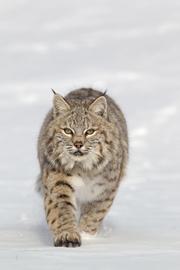
Researchers have identified a generic chemical called a trace amine-associated receptor (TAAR4) that is a common signal in the urine of all predators and allows animals to detect potential danger whether or not the two species have ever come in contact.

Friday, July 8, 2011

Seven New Mammal Species

Researchers have discovered seven new species of mammals in Luzon, Philippines, all of which are of the genus Apomys and are species of forest mice that inhabit small areas of the island.

Thursday, July 7, 2011

Humans Sense Earth's Magnetism

Researchers have found a protein in the human retina (cryptochrome 2, hCRY2) that allows Drosophilia to sense a magnetic field once implanted into the flies, raising the question and field of research of human sensory magnetoreception similar to migratory birds.

Wednesday, July 6, 2011

Historical Climate Change

Recreating the last 1500 years of climate from sediment records, a new study attributes declining temperatures and rising sea-ice as a contributing cause to the collapse of an established Norse Western Settlement in Disko Bay, Greenland, around AD 1350.

Tuesday, July 5, 2011

Gladiator's Gravestone

Recent research has deciphered the 1800-year-old tombstone of Diodorus, a defeated Roman gladiator, with a message that suggests an error or treachery on the part of the referee (summa rudis) lead to his death in the arena.

Monday, July 4, 2011

Sawfish Has Sixth Sense

New experiments suggest the long, tooth-lined snout of a sawfish can detect electric fields of passing prey, acting as an antenna for a "sixth sense" when visibility is limited in dark or murky waters.

Sunday, July 3, 2011

Northern Dinosaur in Australia

A newly discovered dinosaur fossil from Victoria, Australia, is identical to that of Spinosaurids only found thus far north of the equator, suggesting northern and southern hemisphere dinosaurs had more in common than previously believed and may not be so easily categorized by region.

Saturday, July 2, 2011

"Magnetic Ropes" on the Sun

Astronomers have confirmed the existence of "magnetic ropes" on the surface of the Sun, a massive electromagnetic phenomenon that is thought to trigger solar storms producing violent eruptions of plasma outward.

Friday, July 1, 2011

"Extinct" Frog Rediscovered

DNA analysis has shown the Chiricahua leopard frog of central Arizona to be indistinguishable from the "extinct" Las Vegas Valley leopard frog (Lithobates fisheri), thought to be the only endemic US frog to have died out in the modern era and not seen since 1942.