Showing posts with label entomology. Show all posts

Thursday, September 12, 2013

Functioning Gears in Nature

Scientists have found the first example of a naturally occurring gear mechanism in the hind leg joint structure of the plant hopper (Issus coleoptratus) featuring interlocking cog teeth that ensure a coordinated thrust when the insect jumps with a mechanical synchronization beyond what is capable with the nervous system.

Friday, July 12, 2013

Behavior of Watched Crickets

Researchers have demonstrated crickets change their own aggressive behavior when they are aware of being watched by other crickets, the first time such social behavior has been observed in invertebrates and revealing an unexpected depth of learning and memory in insects.

Sunday, January 27, 2013

Insects Orient Using Stars
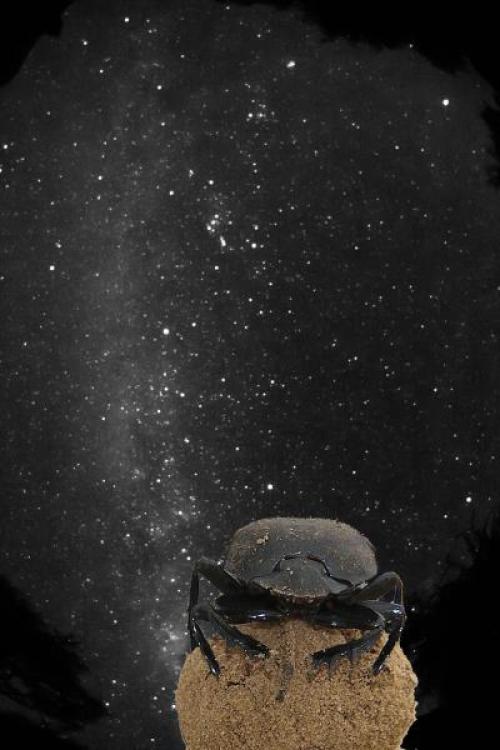
Scientists have demonstrated that dung beetles (superfamily Scarabaeoidea) use the gradient of light from the Milky Way to guide themselves and ensure they continue in a straight line, proving for the first time that insects can use stars for orientation.

Monday, January 7, 2013

Disinfecting Wasp Larvae

A new study of the emerald cockroach wasp (Ampulex compressa) finds that the larvae laid on the host cockroach secrete the chemicals mullein and micromolide, both broad-spectrum antimicrobial agents that sterilize the host before it is consumed by the parasitic larvae.

Tuesday, October 9, 2012

Wasps Have Mechanical Brains

With neurons more than an order of magnitude smaller and thinner than human neurons, the operation of the brains of the miniature greenhouse whitefly parasite (Encarsia formosa) may rely more upon slight mechanical  movements to trigger the chemical release of a signal rather than an electrical action potential.

Friday, April 6, 2012

New "King of Wasps" Found

A newly discovered, bizarre-looking, giant species of wasp (Megalara garuda) has been discovered in Indonesia, with males growing to about two inches long and possessing long, sickle-shaped jaws.

Friday, February 24, 2012

Fighting Parasites with Alcohol

New research shows that fruit flies (D. melanogaster) actively seek out ethanol-containing food to both prevent and treat itself from being parasitized by wasps, which leads to the death of the wasp larvae growing within them and may provide evidence for alcohol's use in fighting infections.

Monday, December 19, 2011

Wasps Recognize Faces

Researchers have demonstrated that the golden paper wasp (Polistes fuscatus) can recognize individuals of its same species from their facial markings, an ability thought to be a product of their highly social lifestyle.

Wednesday, October 12, 2011

Colors of Fossil Beetles

A new study of ancient beetles shows how their original colors are altered over time and with the chemistry and preservation of fossilization, as colors experience a subtle "redshift" from violet to blue to green.

Friday, August 26, 2011

Self-Fertilizing Scales

Females of an agricultural pest known as the cottony cushion scale have been found with female offspring that contain excess sperm from the father growing in their tissues, effectively becoming a self-fertilizing variant in a species that normally reproduces sexually.

Friday, April 15, 2011

Wasps Drop Ants for Food

An experiment with wild wasps in New Zealand has shown that the common wasps (not native to the islands) will pick up ants competing for a food source and drop the still-living insect a short distance away, a competitive, non-lethal behavior never before observed.

Tuesday, April 5, 2011

Termites Boost Crop Yields

Termites and other burrowing insects have been shown to increase crop yields by as much as 36% in arid areas such as Australia by aerating the soil and providing natural fertilizer in their feces, reducing the need for artificial fertilizer and insecticides.

Sunday, March 20, 2011

Fluorescent Silkworms

Researchers have found they can manipulate silkworms to produce colored silk by simply altering their diet accordingly, a practice with implications for reducing that industry's dependence on chemical dyes as well as potentially producing specialized silk with medicinal enhancements.

Tuesday, March 15, 2011

Crickets Fire Rings of Air

African cave crickets have been found to communicate by using their wings to fire doughnut-shaped vortices of air at potential mates, a method that is silent and eliminates detection by predators and which might be adapted for stealthy and secure robotic communications.

Wednesday, February 16, 2011

Flies Detect Isotopes

Research shows that common fruit flies (Drosophila melanogaster) can detect the difference between atomic isotopes of hydrogen and deuterium, which may provide insight into the nature of how olfaction operates by atomic vibration instead of receptor shape.

Tuesday, February 15, 2011

Flea's Jumping Ability

Scientists have finally determined the mechanism behind the flea's relatively remarkable jumping ability, with their hind legs working as multi-jointed levers to amplify the sudden release of an internal "coiled spring" effect from a stretchy protein called resilin.

Friday, December 10, 2010

Hairy Fly Rediscovered

Thought extinct since 1948, specimens of the bizarre and flightless hairy fly (Mormotomyia hirsuta) have been rediscovered living in its only known habitat in Kenya's remote Ukazi Hills where it lives and breeds in the bat-filled clefts of isolated rock.

Wednesday, October 13, 2010

Horror Fly Back from Dead

Once thought to be globally extinct and not sighted for almost 160 years, the bone skipper fly (Thyreophora cynophila) has been spotted in the forests of Central and Western Europe, where it lives and breeds in the bone tissue of highly decayed carrion.

Friday, September 17, 2010

Antibiotic Insect Brains

Researchers have identified nine different molecules present in the brain and nervous systems of cockroaches and locusts that have strong antibiotic properties, including substances that are up to 90% effective at killing Staphylococcus aureus (MRSA) and Escherichia coli without harming human cells.

Tuesday, March 30, 2010

Amphibious Insect Discovered

Scientists have discovered the first truly amphibious insects in the freshwater streams of Hawaii, several species of caterpillar belonging to the moth genus Hyposmocoma that are equally suited for life both in and out of water.