Showing posts with label zoology. Show all posts
Wednesday, June 25, 2014
Vampire Bats Lose Bitter Taste
Once though essential to every animal species as a caution against ingesting toxins, three species of vampire bats have significantly fewer taste receptors for bitter compounds due to their evolutionary specialization for an all-blood diet.
Monday, November 5, 2012
Cancer-Resistant Mole Rats
Studies have found both blind mole rats (Spalax spp.) and their cousins naked mole rats (Heterocephalus glaber) have cells that resist tumor growth and make them virtually immune to cancer, the former committing a "concerted cell death" when densities reach a certain level and the latter simply ceasing to grow beyond a certain cell density.
Tuesday, July 3, 2012
Shrews Warm Up Before Dive
Scientists have found the American water shrew rapidly elevates its body temperature moments before diving into icy waters for its prey, an unexpected attribute and contrary to other aquatic animals whose body temperature drops to slow oxygen consumption while underwater.
Saturday, February 25, 2012
"Immortal" Tasmanian Devil
DNA analysis shows that the bizarre communicable cancer threatening the Tasmanian devil populations can be traced back to a single "immortal" female who lived about 16 years ago and who lives on through the infection, revealing possible leads for a potential vaccine.
Monday, February 20, 2012
Young Goats Develop Accents
Young goats have been found to develop distinctive bleating "accents" to their vocalizations when divided into separate similar social groups, a subtle and innate quality once thought too primitive to be expressed in all but a few mammals and songbirds.
Tuesday, February 14, 2012
Zebra Stripes as Insect Defense
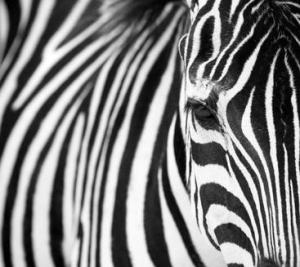
Researchers have found the vertical stripes of the zebra to be the least attractive hide pattern for horseflies (tabanids), who are otherwise attracted to horizontally polarized light to identify aquatic environments, suggesting the zebra stripes evolved as a defense against these insects.
Wednesday, November 16, 2011
Panda Poop Analyzed
In an attempt to discover how pandas live on an all-bamboo diet without the physiological or enzymatic traits common to most herbivores, zoologists have identified thirteen species of bacteria known to break down cellulose present in their feces, with seven of those species unique to pandas.
Friday, September 2, 2011
Elephant Using Stool
A young Asian elephant in a Washington, D.C. zoo used nearby objects as stepstools to retrieve food in a behavioral study, providing the first evidence elephants can run extensive problem-solving scenarios and map out effective solutions in their heads.
Friday, July 8, 2011
Seven New Mammal Species
Researchers have discovered seven new species of mammals in Luzon, Philippines, all of which are of the genus Apomys and are species of forest mice that inhabit small areas of the island.
Saturday, June 11, 2011
Deepest-Living Animal
A newly discovered nematode species (Halicephalobus mephisto) has been found living at a depth of 2.2 miles under the Earth's surface, making it the deepest-living animal yet found and suggesting a richer biosphere at those depths than previously suspected.
Tuesday, June 7, 2011
Reindeer See Ultraviolet
A new study demonstrates that reindeer are able to see ultraviolet wavelengths, a relatively recent evolutionary adaptation since migrating to the Arctic 10,000 years ago in which frozen landscapes can reflect as much as 90% of UV light.
Wednesday, May 25, 2011
Red-Crested Tree Rat
Thought extinct since 1898 and eluding all organized searches since then, the red-crested tree rat (Santamartamys rufodorsalis) has been rediscovered in a nature reserve of northern Colombia, where it is now designated as "critically endangered."
Monday, February 28, 2011
Magnetic Sense in Sea Turtles
Research with newly hatched loggerhead sea turtles (Caretta caretta) reveals a sensitivity to a strong magnetic field, suggesting these sea turtles instinctively use Earth's magnetic field to navigate during migratory periods.
Friday, February 25, 2011
Gaze-Following in Wolves
The ability to follow another's gaze, an important attribute of social animals in collaborative efforts of hunting or survival and a key to understanding intention and attention, has been observed in wolves whereas previously such behavior had only been documented in birds and primates.
Sunday, February 6, 2011
Venomous New Pseudoscorpion
A new species of venomous pseudoscorpion (Cryptogreagris steinmanni), 0.5-inch long and nearly blind, has been discovered living exclusively in the high-altitude caves near Glenwood Springs, Colorado.
Tuesday, February 1, 2011
New African Wolf Discovered
Using genetic analysis, scientists have discovered that the animal most commonly referred to as the Egyptian jackal is actually a new and distinct species of African wolf more closely related to the Holarctic grey wolf, the Indian wolf and the Himalayan wolf.
Tuesday, January 25, 2011
Iranian Cheetah Subspecies
Genetic analysis of the critically endangered Asian cheetahs of Iran reveal that it is a distinct subspecies (Acinonyx jubatus venaticus) that split from African cheetahs about 30,000 years ago.
Saturday, January 22, 2011
Quantum States in Bird's Eyes
In a process known as the radical pair (RP) mechanism, bird's eyes are thought to detect changes in quantum-entangled electron pairs separated by light and altered by Earth's magnetic field, allowing them to orient themselves by exploiting this phenomenon of long-lived quantum states.
Tuesday, October 26, 2010
New Amazon Species
A new report issed by the World Wildlife Fund (WWF) details more than 1200 new species discovered over a decade-long study of the Amazon rainforest, including an new anaconda species, a "goliath" catfish that feeds on monkeys, a pink river dolphin and hundreds of new amphibians, spiders and plant species.
Sunday, October 17, 2010
New Carnivorous Mammal
A new species of cat-sized, carnivorous mammal named Durell's vontsira (Salanoia durrelli) similar to a mongoose has been identified living in Madagascar, one of the most threatened carnivore species in the world and the first new species to be discovered in 24 years.
Subscribe to:
Posts (Atom)
.jpg)


