Showing posts with label optics. Show all posts
Showing posts with label optics. Show all posts
Tuesday, February 14, 2012
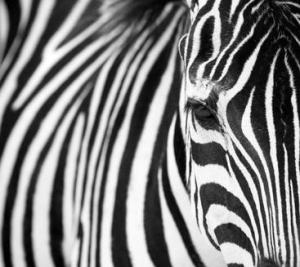
Zebra Stripes as Insect Defense

Monday, December 5, 2011
Viking Navigational "Sunstones"

Monday, November 7, 2011
Channel-type Nanostructure Laser

Wednesday, October 26, 2011
Quaternary Rainbow Photo

Wednesday, October 19, 2011
Renaissance Halo Diagram

Sunday, June 19, 2011
First Images of Photoreceptors

Sunday, June 12, 2011
Moving Mirrors Create Light

Monday, August 16, 2010
Heart Paced with Laser

Researchers have found that pulsed laser light can pace the contractions in an embryonic avian heart with no apparent damage to tissue, which may lead to a new generation of pacemakers and neonatal devices.
Tuesday, March 9, 2010
Seeing Through Paint, Paper

Researchers have found a method to reconstruct the light passing through opaque objects such as paper, paint or biological tissue using a mathematical transmission matrix to reconstruct the image based on the known physical properties of the material, essentially viewing opaque solids as lenses.
Monday, January 18, 2010
Light Tied in Knots
 Using specialized holograms to create and manipulate optical vortices, physicists were able to literally tie knots in beams of light using the science of knot theory, an abstract mathematics specialty that previously had no physical application.
Tuesday, February 17, 2009
New Microscopy Method Provides Increased Resolution
 Scientists at the Howard Hughes Medical Institute's Janelia Farm Research Campus have developed a new method that produces the best three-dimensional resolution ever with an optical microscope.
Beginning with the super-high resolution photoactivated localization microscopy (PALM), researchers added an interferometry method to create what they call interferometric photoactivated localization microscopy (iPALM). iPALM provides resolution down to about 10 to 20 nanometers, or roughly ten times the size of an average protein molecule. The new method also allows a three-dimensional measurement of image depth, an attribute difficult to obtain with optical microscopes.
The science of interferometry uses a light beam reflected off a surface and then compared with its original beam. As it is reflected, the light undergoes a small shift in wavelength that can be detected and measured for incredibly small differences in depth and distance, such as on the surface of a computer chip. PALM extends the resolution for conventional optical microscopes, which are inherently limited by the wavelength of visible light, and iPALM can theoretically achieve resolutions on the subatomic scale.
iPALM uses a very modest amount of light, which is critical for some biological samples that could either be damaged by strong light or distorted by the need to use reflective dyes for optical measurements.
These results were published in the February 2nd issue of the Proceedings of the National Academy of Sciences.
Source: ScienceDaily
Friday, January 9, 2009
Spookfish Uses Mirrored Eyes to See
 Scientists at Tuebingen University have discovered that the deep-sea spookfish is the first vertebrate to develop natural mirrors to focus light into its eyes.
Known for about 120 years, this first live specimen of the brownsnout spookfish (Dolichopteryx longipes) was caught last year off the coast of Tonga. Spookfish generally live at ocean depths of 1000 meters or more and in near total darkness. Their two compound eyes consist of two parts each, one of which is a mirrored surface used to focus faint traces of light into an image on the other part.
These mirrors are made up of guanine crystals, a naturally occurring substance in fish scales that produces a pearly, iridescent effect and has a high reflectivity. The mirrored portions are curved in such a way as to focus the reflected light on the fish's retina.
These results appear in a recent issue of Current Biology.
Photo: BBC News
Subscribe to:
Posts (Atom)

